
SAFORYNACADEMY
Telegram Fake Support Scams: How to Spot Fraudulent Customer Service
One fake support message could cost you your entire cryptocurrency wallet.
Imagine receiving a Telegram message from someone claiming to be an official customer support representative. Their profile picture looks professional, their username resembles a trusted company's name, and they seem eager to help you solve a problem.
They tell you that your wallet needs verification, your funds have been frozen, or your account is at risk.
To resolve the issue, they ask you to click a link, connect your wallet, or provide sensitive information.
What appears to be helpful customer service may actually be a carefully planned cryptocurrency scam.
Fake customer support scams are a common threat across Telegram and other messaging platforms. Attackers impersonate exchanges, wallet providers, blockchain projects, and even Telegram support representatives to steal cryptocurrency.
In this SAFORYN Security Academy guide, you'll learn how these scams work, how to recognize fake support accounts, and how to protect your digital assets.
1. What Is a Telegram Fake Support Scam?
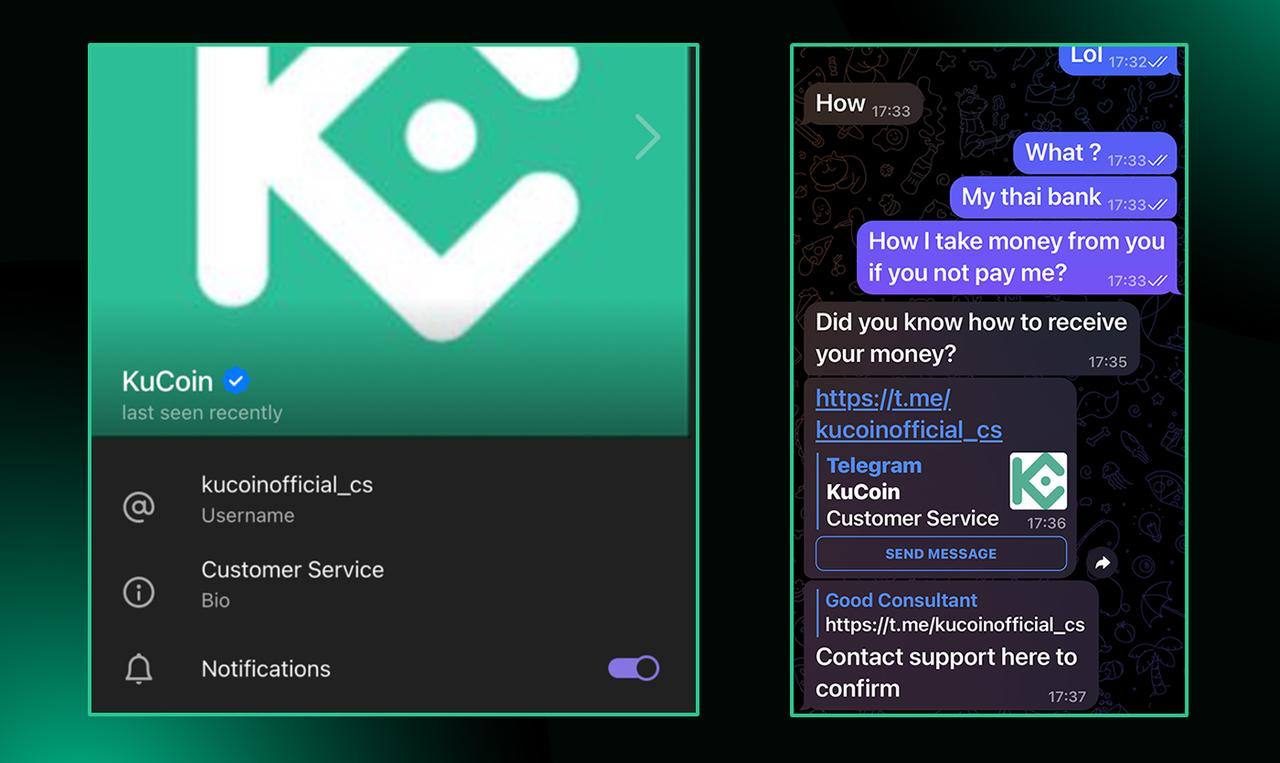
A Telegram fake support scam occurs when a fraudster pretends to represent a legitimate company, cryptocurrency exchange, wallet provider, or Telegram itself.
Scammers often create accounts with names such as:
Official Customer Support
Telegram Security Team
Wallet Verification Department
Exchange Help Center
Crypto Recovery Support
These names are not proof of official status. They are examples of the types of identities scammers may imitate.
Fraudsters may copy company logos, profile photos, descriptions, and usernames to appear legitimate.
They frequently target users who have publicly asked for assistance in cryptocurrency-related Telegram groups.
For example, a user posts:
"I can't withdraw my USDT. Can someone help?"
Shortly afterward, a private account contacts them:
"Hello, I'm from the official support team. I can help you resolve your withdrawal problem."
The conversation may sound convincing, but the person behind the account could be a scammer.
The goal is usually to steal sensitive information, obtain wallet permissions, or convince the victim to transfer cryptocurrency.
2. Common Telegram Fake Support Scenarios
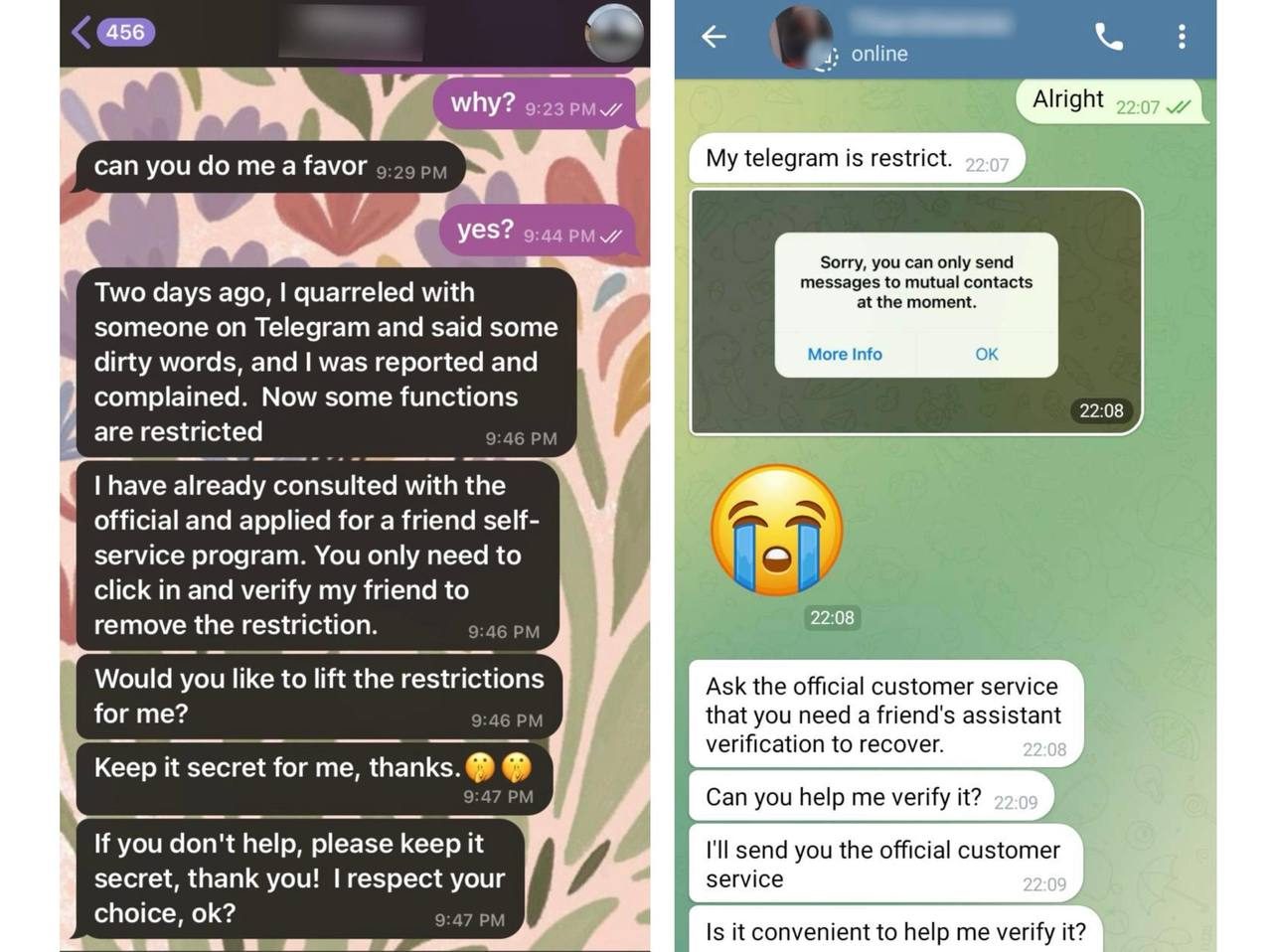
Fake support scams come in several forms. Understanding the most common scenarios can help you recognize suspicious messages before losing money.
Scenario A: Account Restriction Scam
A scammer claims your exchange or wallet account has been restricted because of suspicious activity.
They may say:
"Your account will be suspended within 24 hours unless you complete security verification."
The message includes a link to a fake login or verification website.
If you enter your credentials, the scammer may gain access to your account.
Scenario B: Fake Refund or Withdrawal Assistance
A scammer claims they can help recover a failed cryptocurrency transaction or release frozen USDT.
They may request a processing fee, tax payment, or wallet activation deposit.
After receiving the payment, they disappear or demand additional fees.
Scenario C: Fake Airdrop or Reward
The scammer offers a free cryptocurrency reward, exclusive airdrop, or compensation payment.
To claim the reward, you are instructed to connect your wallet to an unfamiliar website.
The website may request dangerous token approvals or trick you into signing a malicious transaction.
Scenario D: Recovery Phrase Verification
A fake support agent tells you that your wallet needs to be synchronized or repaired.
They ask for your 12-word or 24-word recovery phrase.
Anyone with that phrase may be able to recreate your wallet and steal your cryptocurrency.
Remember: Legitimate customer support does not need your recovery phrase or private keys.
3. How Telegram Fake Support Scams Work
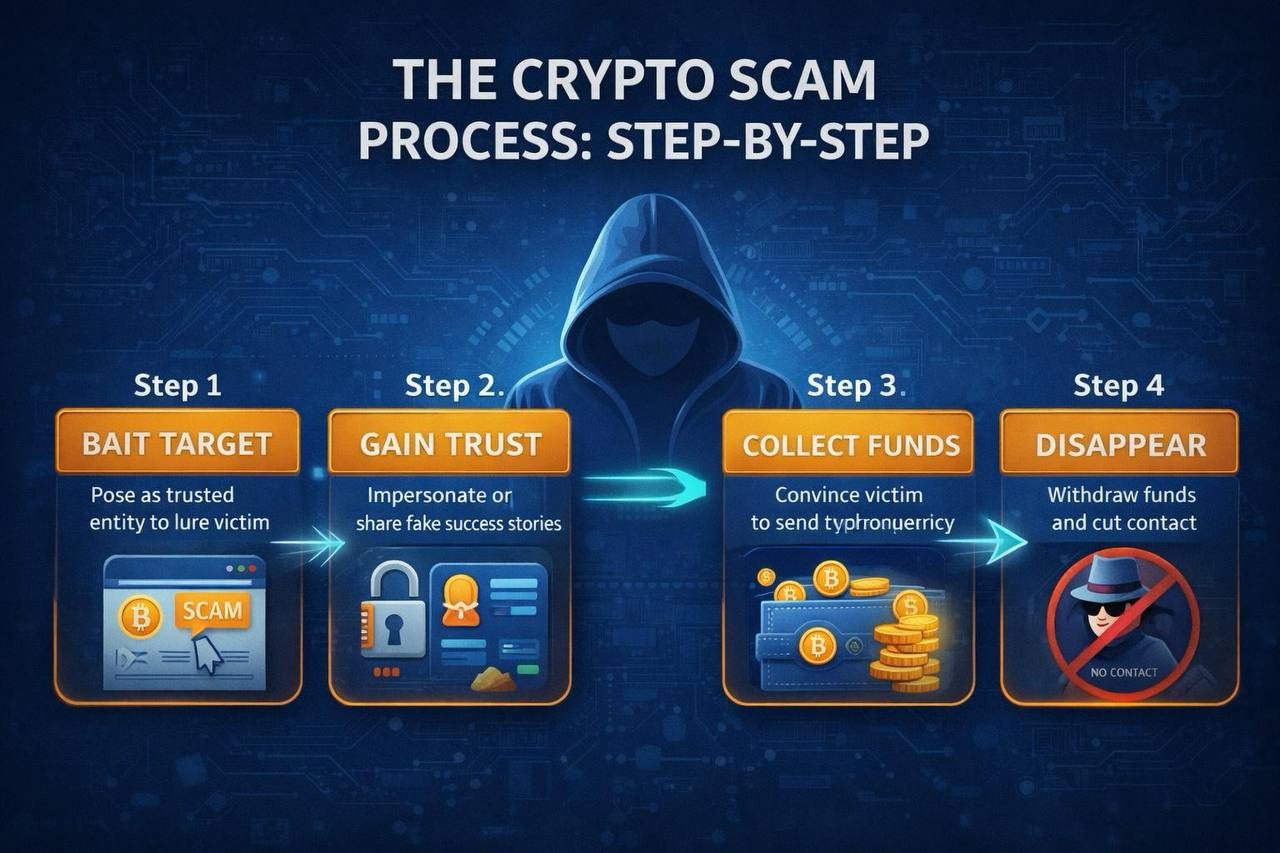
Most fake customer support scams follow four stages.
Step 1 — Initial Contact
The scammer sends an unsolicited private message, often after seeing your question in a public Telegram group.
They claim to be an official support representative and offer immediate assistance.
Step 2 — Building Trust
The scammer uses a company logo, professional language, and a convincing profile.
They may refer to your recent support question to make the conversation appear genuine.
Step 3 — The Dangerous Request
Once they gain your trust, they ask you to perform an action such as opening a phishing website, revealing login credentials, sharing your recovery phrase, connecting your wallet, or sending a verification payment.
Step 4 — Asset Theft
If you follow the instructions, attackers may gain access to your account, obtain control over your wallet, or receive cryptocurrency directly.
In some cases, the scammer continues communicating with the victim to demand additional payments.
4. Seven Warning Signs of Fake Telegram Support
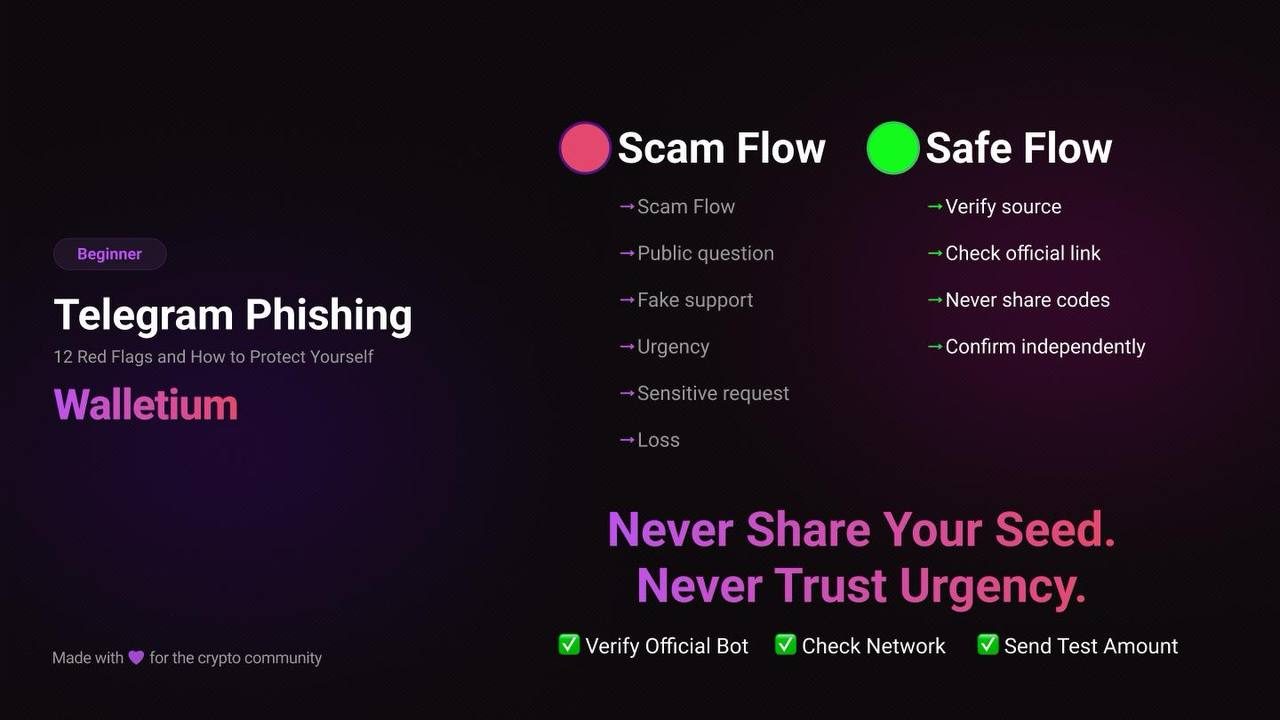
Recognizing these warning signs can help you avoid fraudulent support accounts.
1. They contact you first. Be suspicious of unsolicited private messages from people claiming to be support representatives.
2. Their username resembles an official account. Scammers frequently use subtle spelling changes, additional characters, or copied profile photos.
3. They ask for recovery phrases or private keys. These should never be shared with customer support.
4. They send unfamiliar links. Fraudulent websites may imitate legitimate login pages or wallet interfaces.
5. They demand an upfront payment. Requests for a deposit to unlock funds, complete verification, or process a refund are major warning signs.
6. They create artificial urgency. Threats of immediate account suspension are commonly used to pressure victims.
7. They discourage independent verification. Scammers may insist that you communicate only through their private chat rather than the company's official support channels.
A verified-looking badge, logo, or username alone does not guarantee authenticity.
5. An Example of a Telegram Fake Support Scam
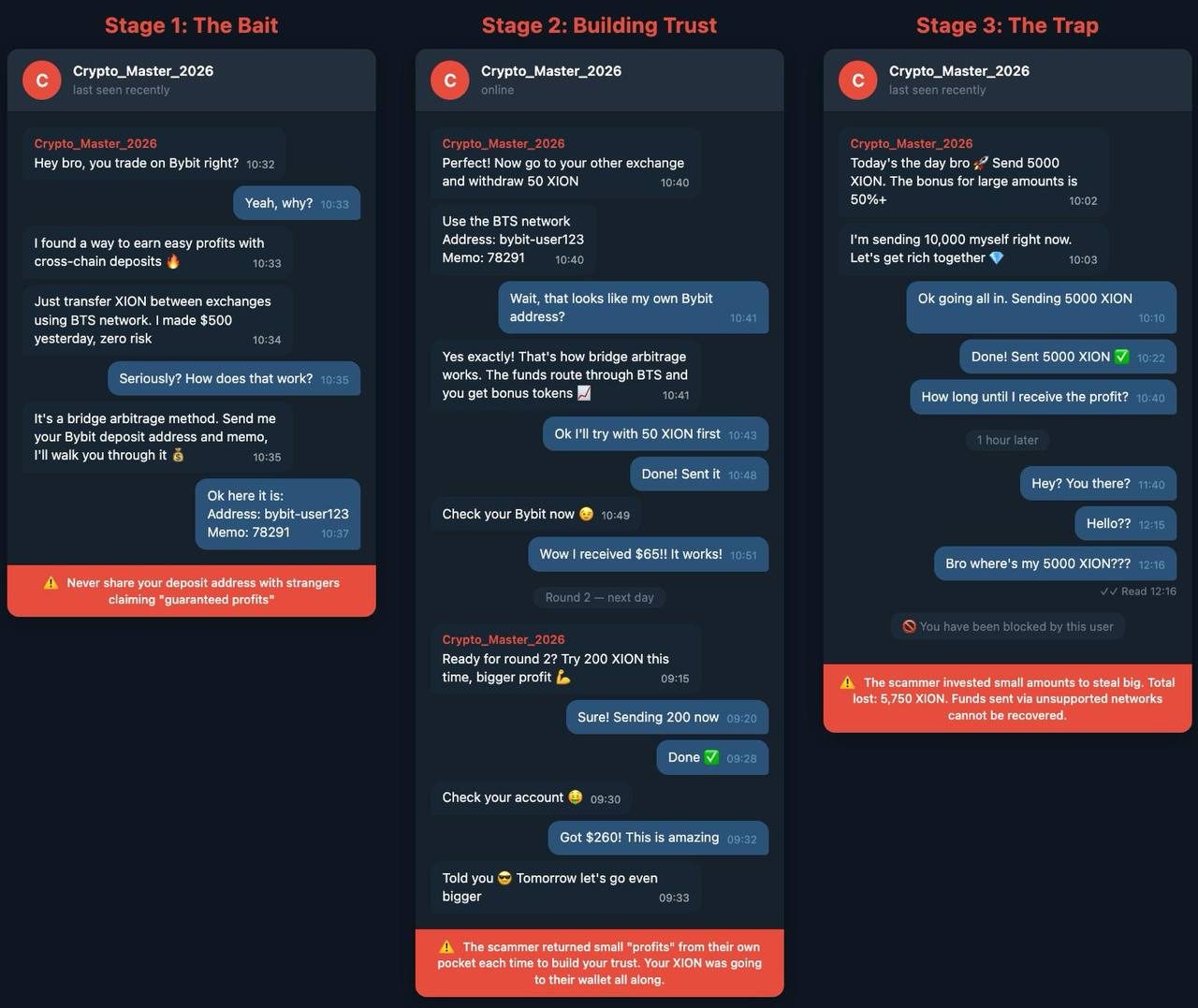
Consider the following fictional example.
A cryptocurrency user joins a Telegram group associated with a trading platform and asks why a USDT withdrawal has not arrived.
Within minutes, someone sends a private message claiming to be a customer support agent.
The scammer writes:
"Hello. Your withdrawal has been temporarily restricted. Please complete account verification to release your funds."
The user receives a link to a website designed to resemble the platform's official login page.
After entering their credentials, the user is asked to provide a one-time security code.
The scammer uses the stolen information to attempt unauthorized account access.
If the exchange's other security protections are bypassed, the attacker may be able to withdraw funds.
The user later discovers suspicious account activity.
This example illustrates how scammers combine impersonation, urgency, and phishing to target cryptocurrency holders.
This is an educational scenario, not a verified account of a specific victim or incident.
6. How to Protect Yourself from Telegram Fake Support Scams
Protecting yourself begins with verifying who you are communicating with and refusing suspicious requests.
Use Official Support Channels
Access customer support through the company's official website or application.
Do not assume a Telegram account is legitimate simply because it uses a familiar name or logo.
Never Share Sensitive Information
Never disclose your recovery phrase, private keys, passwords, or one-time verification codes.
Legitimate support representatives do not need these secrets to investigate routine account problems.
Avoid Suspicious Links
Do not open unexpected links sent through private messages.
When necessary, navigate to the company's official website independently.
Be Careful When Connecting Your Wallet
Connecting a wallet to an unfamiliar website may expose you to malicious signature requests or token approvals.
Always review what a transaction or approval authorizes before signing.
Enable Additional Account Security
Activate Telegram two-step verification and other available account security features.
Review active sessions regularly and terminate any you do not recognize.
Block and Report Suspicious Accounts
If an account impersonates customer support or requests sensitive information, stop communicating with it.
Use Telegram's reporting features and notify the impersonated company's official support team.
7. What Should You Do If You Have Already Been Scammed?
If you suspect that you have interacted with a fake Telegram support account, take action as quickly as possible.
If you shared your login credentials: Change your password through the official website or application, revoke unfamiliar sessions, and review account security settings. Contact the platform's official support team immediately.
If you revealed your recovery phrase: Treat the wallet as compromised.
Create a new wallet with a new recovery phrase on a trusted device, and safely transfer any remaining assets as soon as possible.
If you signed a suspicious wallet transaction: Review the transaction and any token allowances. Revoke dangerous approvals where possible, and seek qualified assistance if you are unsure about the wallet's safety.
If you transferred cryptocurrency: Preserve the recipient address, transaction hash, amount, date, and network details. Report the incident to the relevant exchange, platform, and appropriate law enforcement agency.
If you downloaded suspicious software: Stop using the affected device for sensitive wallet activity until it has been assessed and secured.
Do not trust strangers who promise guaranteed asset recovery for an upfront payment. Recovery scams frequently target people who have already lost cryptocurrency.
8. SAFORYN Security Reminder
Stay Alert. Verify Before You Trust.
Fake support agents rely on trust, urgency, and confusion.
Before responding to any customer support message, ask yourself:
Did I contact this support channel myself?
Can I independently verify that the account is official?
Is this person asking for sensitive information?
Am I being pressured to act immediately?
Remember: No legitimate support agent should ask for your wallet recovery phrase, private keys, or password.
9. Share This Article. Help Prevent the Next Victim.
One Share Could Save Someone's Crypto.
Thousands of cryptocurrency users encounter suspicious messages and fake support accounts. Awareness is one of the most effective defenses against these scams.
To help prevent the next victim, SAFORYN encourages you to share this article with your friends, family, and crypto communities. Your one share could help someone recognize a fake support agent before losing their hard-earned assets.