
SAFORYNACADEMY
USDT Transfer Scams
How Scammers Trick Users Into Sending Stablecoins — and How to Stay Safe
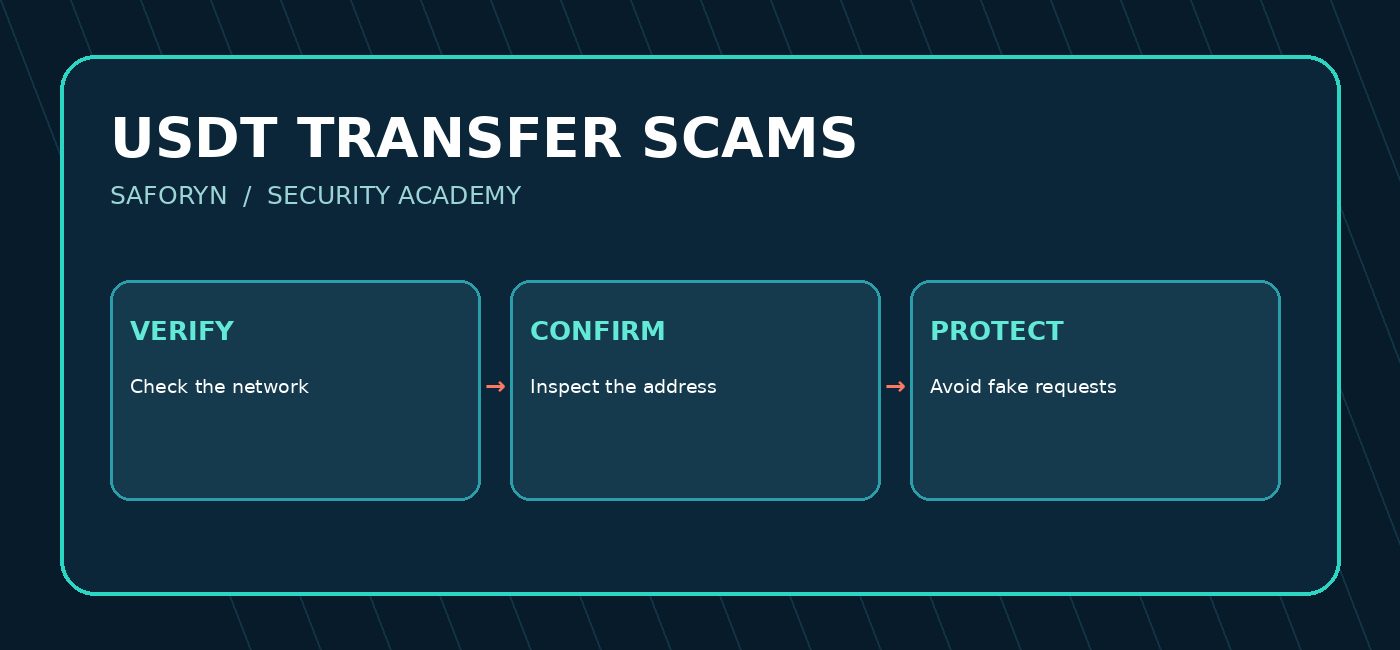
One wrong address, a fake payment request, or a fraudulent “verification fee” can cost you your USDT. This guide explains the most common transfer scams and practical steps to reduce risk.
1. What Is a USDT Transfer Scam?
A USDT transfer scam is any deception that persuades someone to send Tether (USDT) to an attacker-controlled address, approve a malicious transaction, or pay a fee under false pretenses. USDT operates on multiple blockchains, including Ethereum (ERC-20) and TRON (TRC-20). A valid-looking address does not prove the recipient is trustworthy.
2. Common Ways Scammers Steal USDT
Fake customer support: An impersonator claims your wallet or exchange account needs a security deposit or unlock fee.
Fake merchant or investment opportunity: A seller or promoter demands advance USDT payment, then disappears or refuses delivery.
Address poisoning: Attackers send transactions from lookalike addresses hoping you will copy a fraudulent address from your history.
Wrong-network pressure: A scammer insists you use a specific chain or unverified deposit instructions without allowing time to check.
Fake recovery or release fees: After a failed withdrawal or prior scam, someone demands more USDT to release funds or recover losses.
3. How a Typical Scam Unfolds
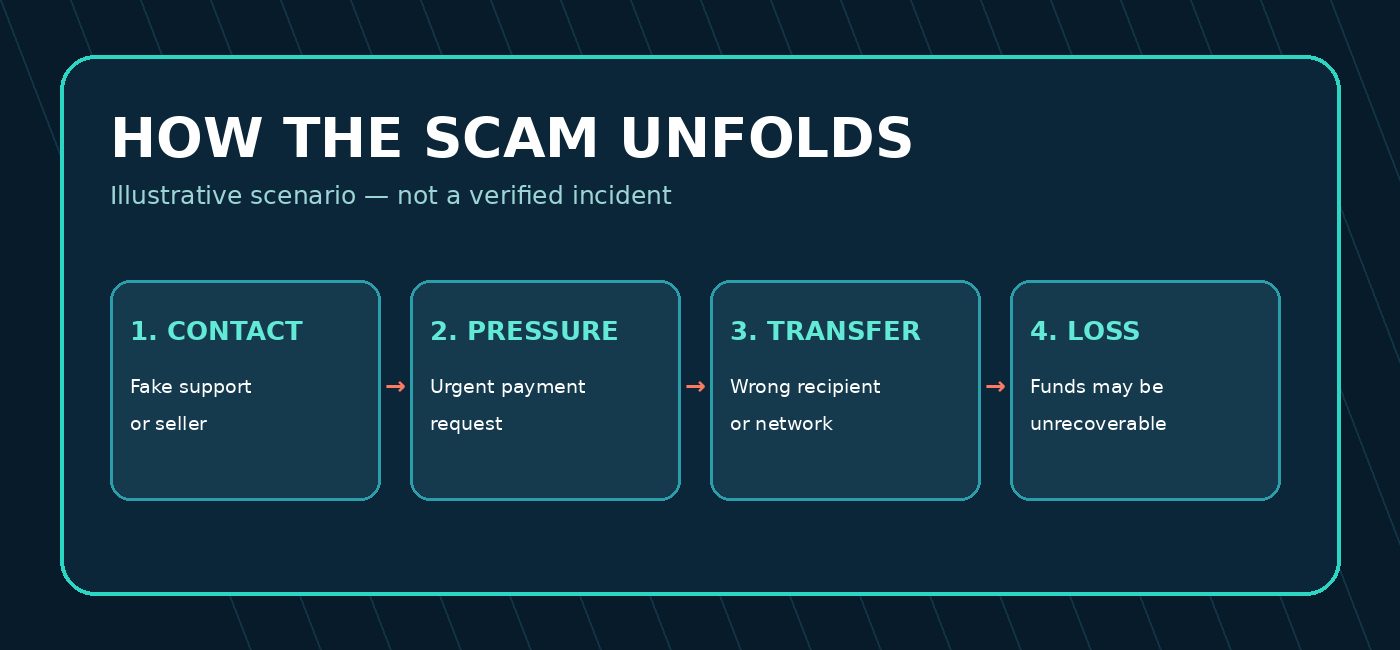
An attacker contacts a user through Telegram, social media, a marketplace, or a fake support page. They create urgency, provide a receiving address, and insist on immediate payment. After the transaction is confirmed, they stop responding or demand additional fees. This is an illustrative pattern; individual cases differ.
4. Warning Signs You Should Never Ignore
- Guaranteed returns or unusually cheap deals requiring advance USDT payment.
- A “support agent” contacting you first and asking for transfers, passwords, or seed phrases.
- Pressure to send immediately, skip a test transaction, or keep the payment secret.
- Requests for taxes, verification fees, or deposits before releasing a supposed balance.
- Recipient details changing unexpectedly, especially after copying from transaction history.
5. How to Transfer USDT More Safely
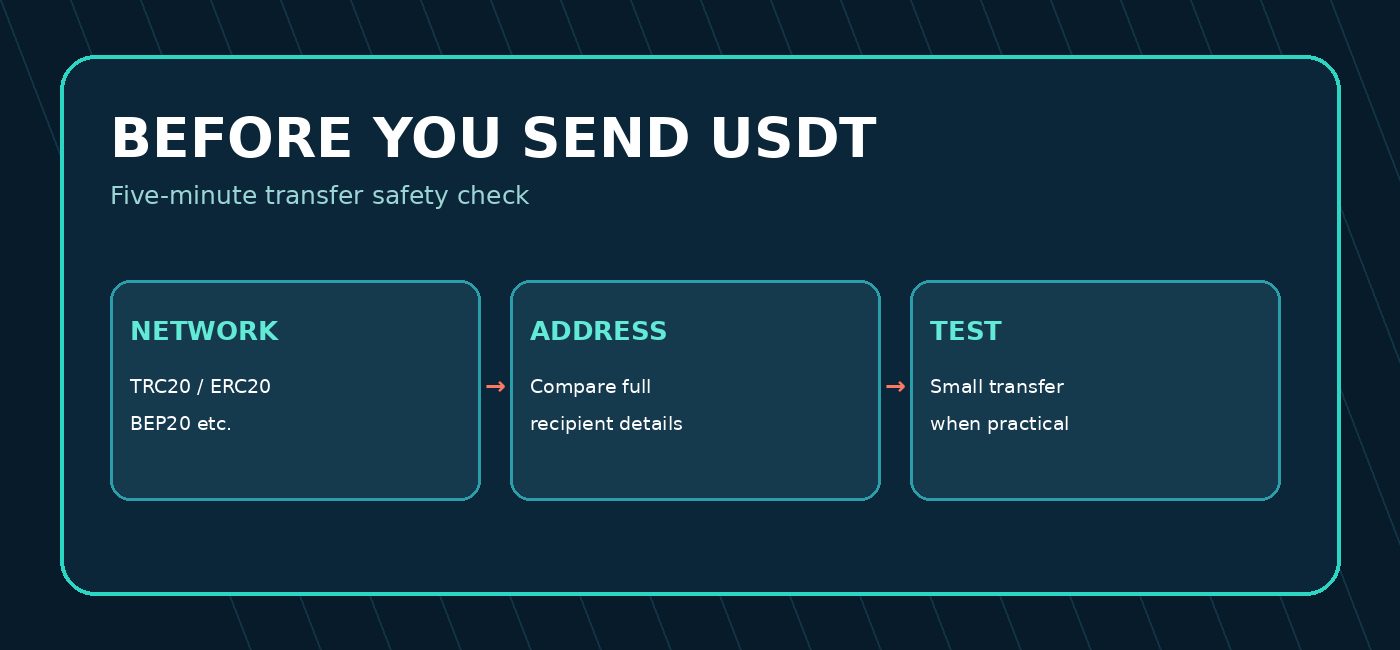
Confirm the recipient: Verify identity and payment instructions through an independent, trusted channel. A screenshot or display name is not enough.
Match the blockchain network: Ensure the sender and receiver support the exact USDT network. Networks are not interchangeable.
Check the complete address: Compare the full destination address using a trusted source. Do not rely on the first and last few characters.
Use a small test transfer: For larger amounts, consider a small test transfer first, while remembering that it cannot prove the recipient is honest.
Review wallet permissions: Do not sign unexplained approvals or connect your wallet to suspicious websites.
Verify fees and policies: Check network fees and official exchange withdrawal rules directly in the provider’s app or website.
6. What If You Already Sent USDT to a Scammer?
Stop sending money immediately, including supposed recovery, tax, or release fees. Preserve the transaction hash, destination address, chain, amount, timestamps, chat history, and screenshots. Contact the exchange or wallet provider involved, and report the incident to appropriate local authorities. If the recipient is an exchange-controlled address, report promptly; assistance is not guaranteed. Blockchain transfers are generally irreversible, and asset freezing or recovery cannot be promised.
If you also exposed a seed phrase or signed a malicious approval, treat that as a separate security incident: move remaining assets to a fresh wallet when safe, and review/revoke risky allowances using trusted tools.
7. SAFORYN Security Reminder
USDT may be stable in price, but a transfer is not automatically safe. Verify the person, the network, and the full receiving address before you send. When someone creates urgency, slow down and check independently.
Share This Guide. Help Prevent the Next Victim.
One share could protect someone’s savings. SAFORYN encourages you to send this guide to friends and family who use USDT — your warning today may prevent their loss tomorrow.
SAFORYN is an independent educational platform. This article is not financial or legal advice, does not verify a specific allegation, and does not promise asset recovery. Illustrations are conceptual.