SAFORYNACADEMY
Malicious Wallet Approvals: How Scammers Drain Your Crypto Without Your Recovery Phrase
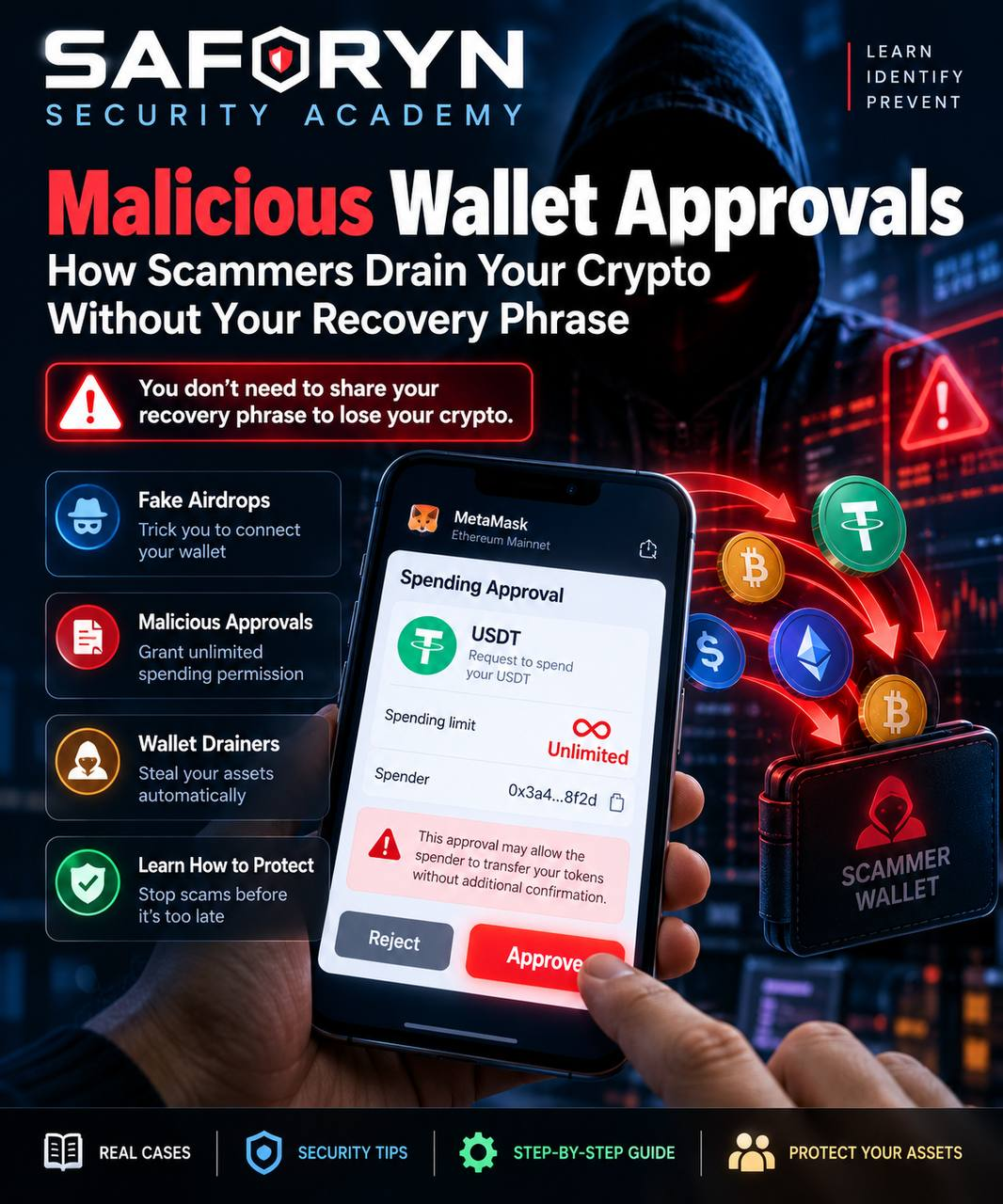
Your recovery phrase may be secret, yet your tokens can still be stolen if you authorize a malicious spender. Learn the warning signs, how approvals work, and what to do if you have signed a dangerous request.
1. What Is a Malicious Wallet Approval?
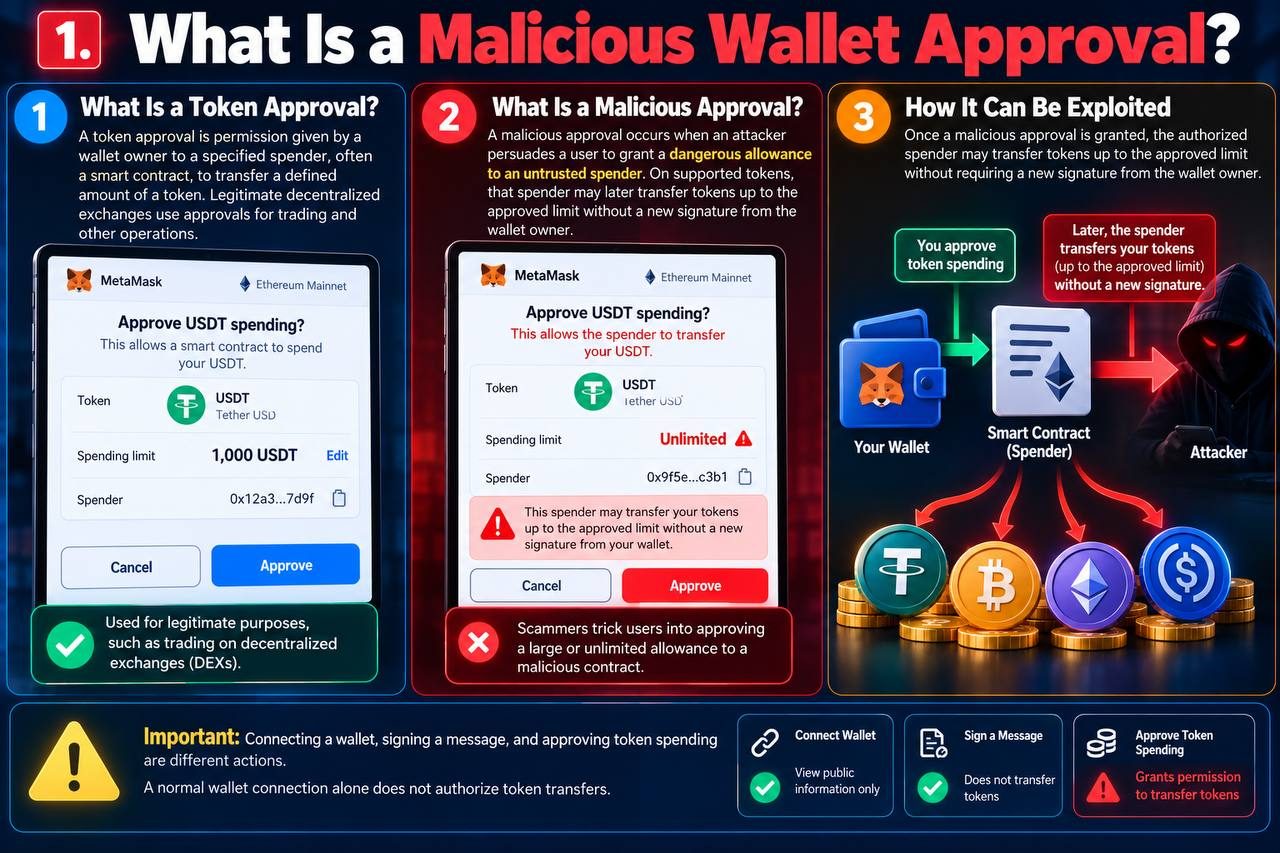
A token approval is permission given by a wallet owner to a specified spender, often a smart contract, to transfer a defined amount of a token. Legitimate decentralized exchanges use approvals for trading and other operations.
A malicious approval occurs when an attacker persuades a user to grant a dangerous allowance to an untrusted spender. On supported tokens, that spender may later transfer tokens up to the approved limit without a new signature from the wallet owner.
Important: Connecting a wallet, signing a message, and approving token spending are different actions. A normal wallet connection alone does not authorize token transfers.
2. How the Scam Works

Stage 1 — The lure: A message advertises a free airdrop, NFT reward, staking opportunity, token migration, or urgent wallet security check.
Stage 2 — The imitation: A fraudulent website imitates a familiar crypto project and encourages visitors to connect their wallets.
Stage 3 — The request: The website asks for a token approval, permit signature, or other authorization. The spender or amount may be hidden behind confusing wording.
Stage 4 — The transfer: Once the authorization is valid, the attacker may use it to transfer approved tokens, or may trick the user into signing a direct malicious transaction.
Stage 5 — The discovery: Tokens disappear; some remaining allowances may still be active.
3. A Typical Example
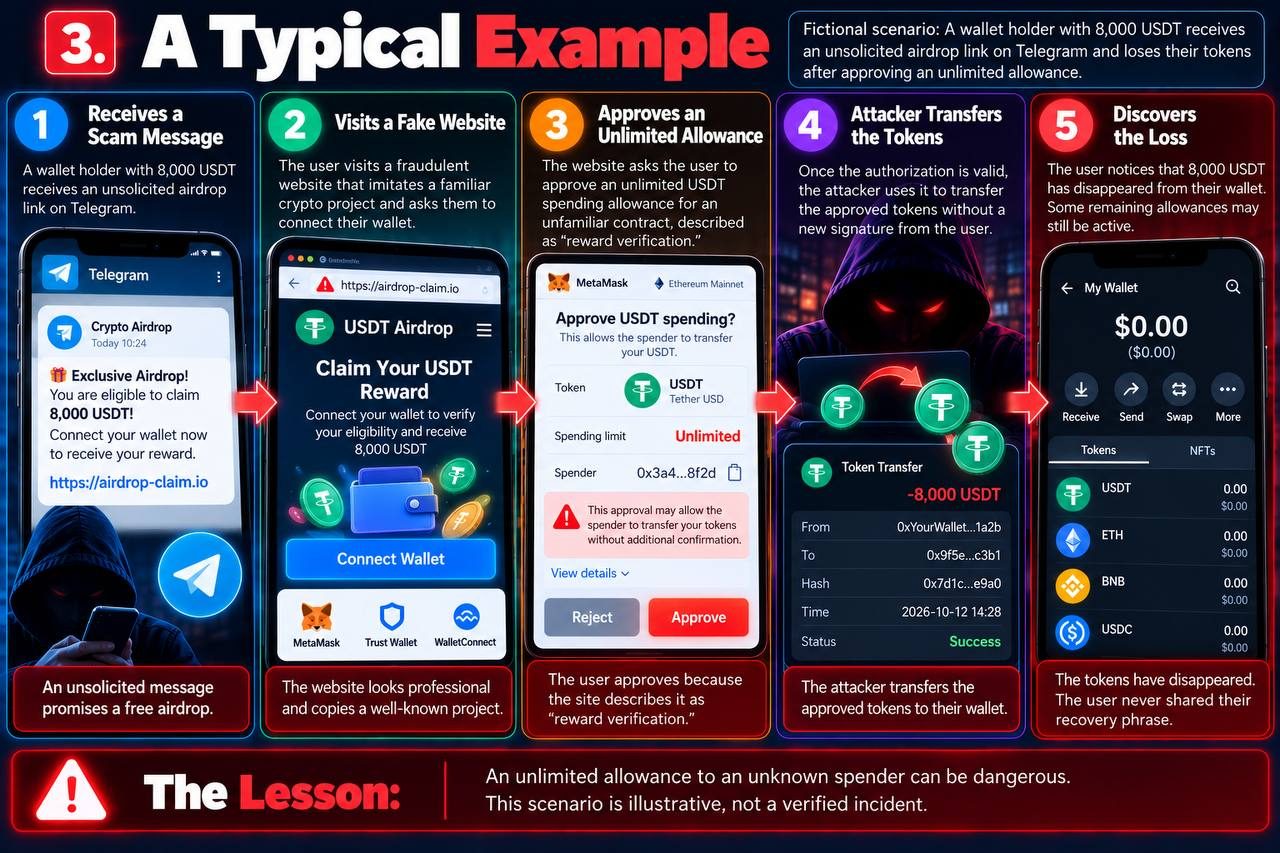
Fictional scenario: A wallet holder with 8,000 USDT receives an unsolicited airdrop link on Telegram. The website asks them to connect their wallet and approve an unlimited USDT spending allowance for an unfamiliar contract.
The user approves because the site describes the action as “reward verification.” The attacker then uses the authorization to move the approved tokens. The user never shared their recovery phrase.
The lesson: An unlimited allowance to an unknown spender can be dangerous. This scenario is illustrative, not a verified incident.
4. Common Wallet Drainer Tactics
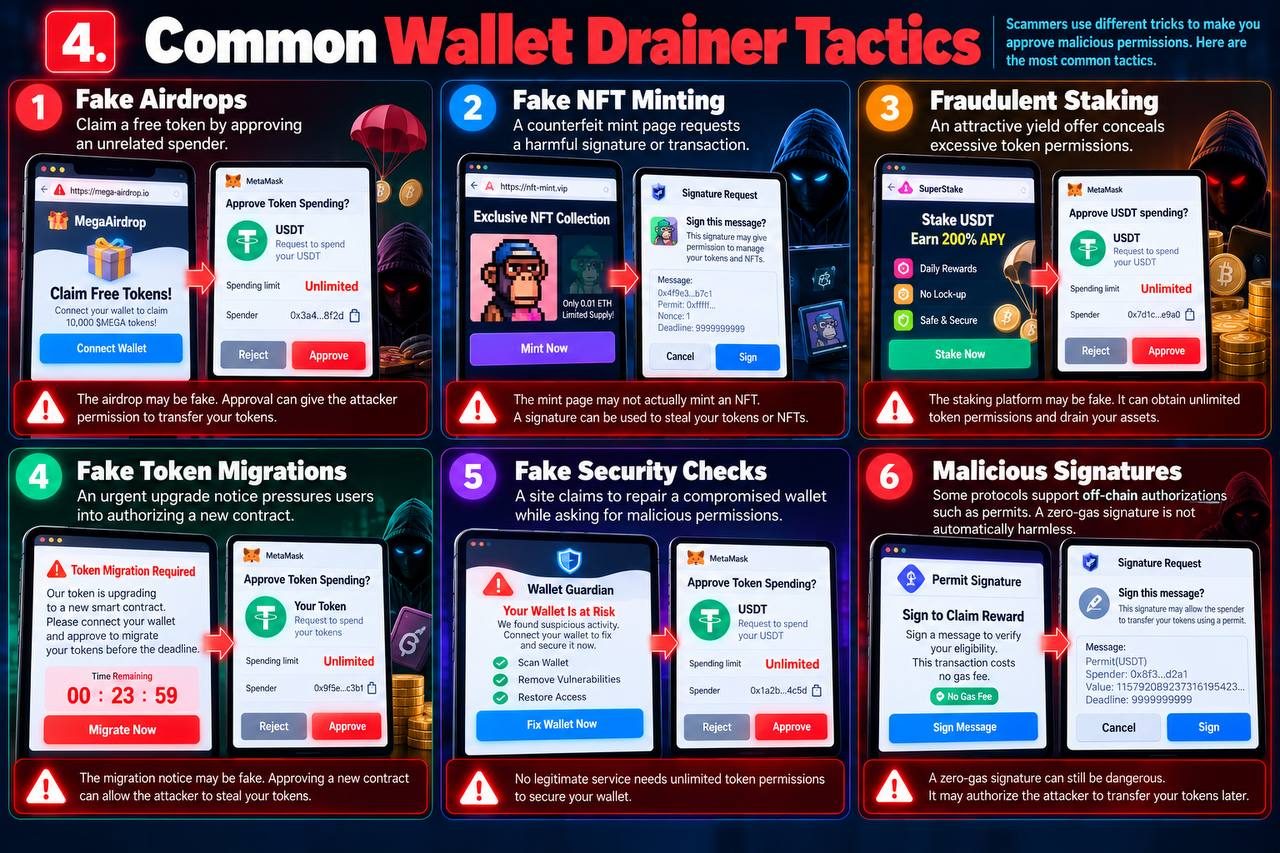
Fake airdrops — Claim a free token by approving an unrelated spender.
Fake NFT minting — A counterfeit mint page requests a harmful signature or transaction.
Fraudulent staking — An attractive yield offer conceals excessive token permissions.
Fake token migrations — An urgent upgrade notice pressures users into authorizing a new contract.
Fake security checks — A site claims to repair a compromised wallet while asking for malicious permissions.
Malicious signatures — Some protocols support off-chain authorizations such as permits. A zero-gas signature is not automatically harmless.
5. Eight Warning Signs
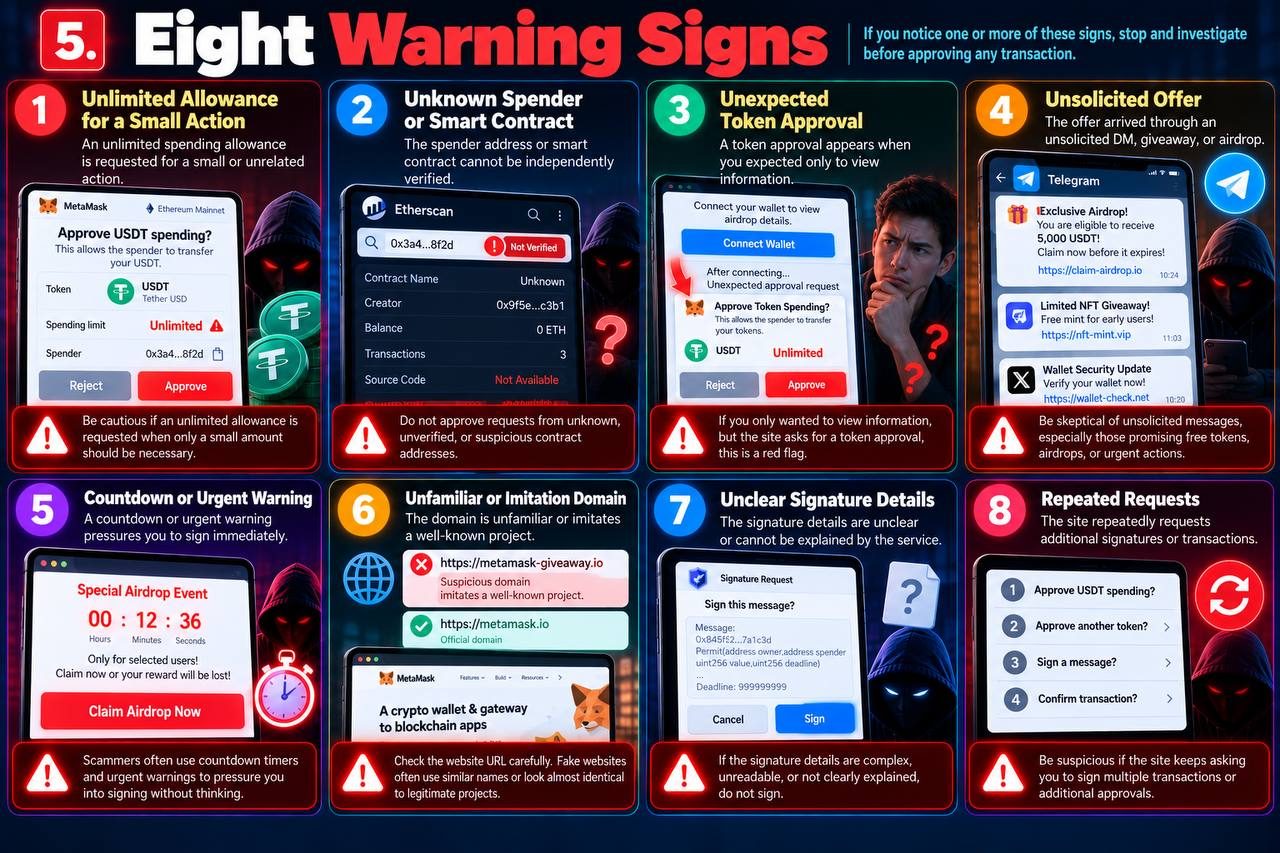
1. An unlimited spending allowance is requested for a small or unrelated action.
2. The spender address or smart contract cannot be independently verified.
3. A token approval appears when you expected only to view information.
4. The offer arrived through an unsolicited DM, giveaway, or airdrop.
5. A countdown or urgent warning pressures you to sign immediately.
6. The domain is unfamiliar or imitates a well-known project.
7. The signature details are unclear or cannot be explained by the service.
8. The site repeatedly requests additional signatures or transactions.
6. How to Protect Your Wallet
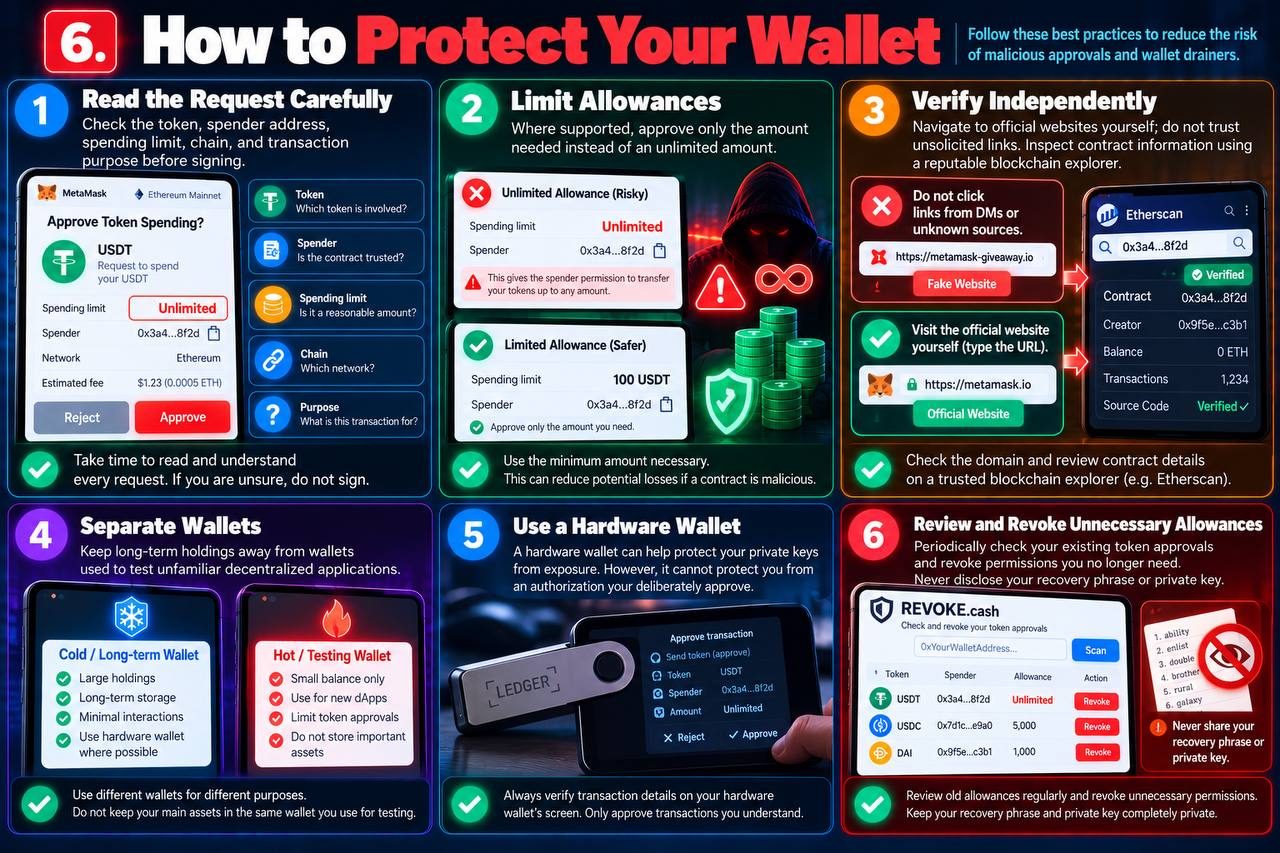
Read the request: Check the token, spender address, spending limit, chain, and transaction purpose before signing.
Limit allowances: Where supported, approve only the amount needed instead of an unlimited amount.
Verify independently: Navigate to official websites yourself; do not trust unsolicited links. Inspect contract information using a reputable blockchain explorer.
Separate wallets: Keep long-term holdings away from wallets used to test unfamiliar decentralized applications.
Use a hardware wallet where appropriate, but remember it cannot protect you from an authorization you deliberately approve.
Review old allowances and revoke unnecessary permissions. Never disclose a recovery phrase or private key.
7. What to Do After a Suspicious Approval
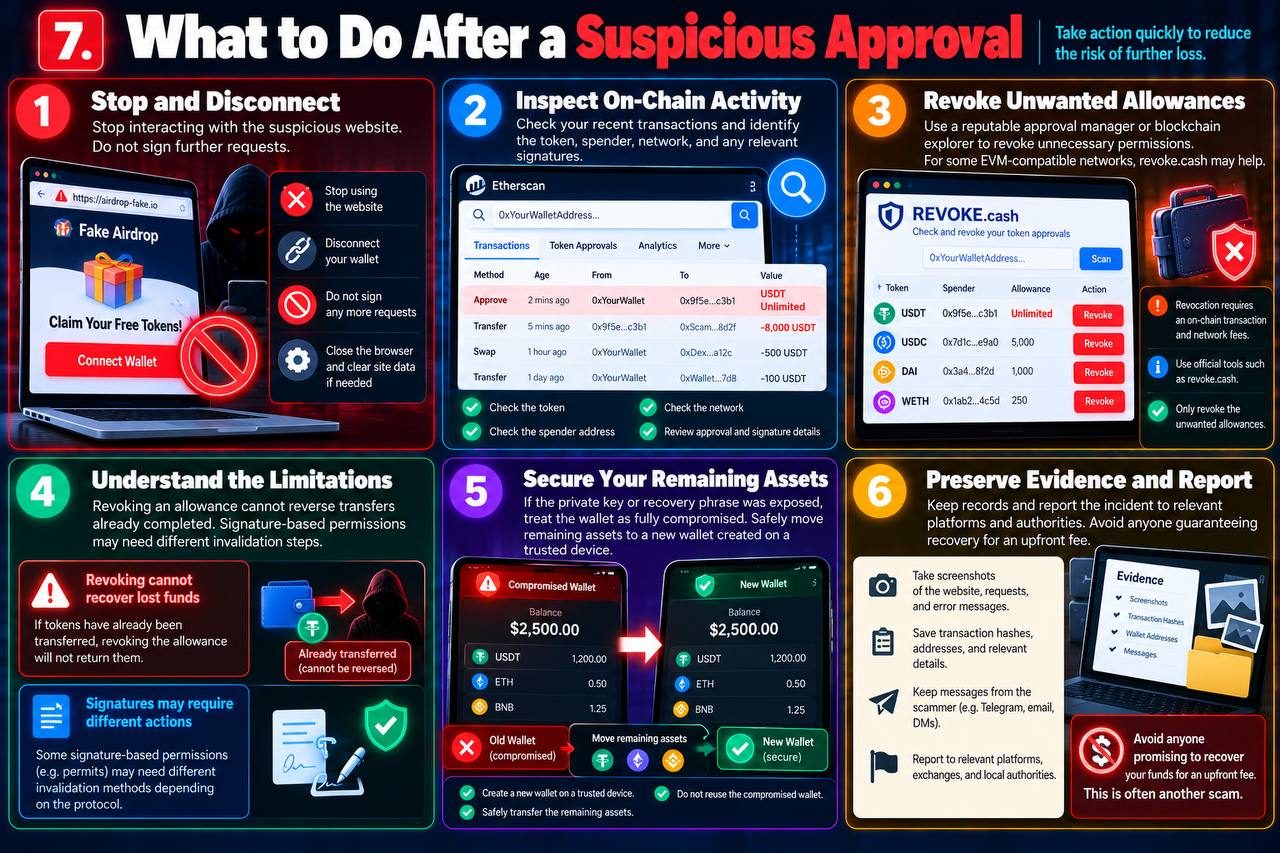
Stop interacting with the suspicious website. Do not sign further requests.
Inspect recent on-chain transactions and identify the token, spender, network, and any relevant signatures.
Use a reputable approval manager or blockchain explorer to revoke unwanted allowances. For some EVM-compatible networks, revoke.cash may help. Revocation requires an on-chain transaction and network fees.
Revoking an allowance cannot reverse transfers already completed. Signature-based permissions may need different invalidation steps.
If the private key or recovery phrase was exposed, treat the wallet as fully compromised. Safely move remaining assets to a new wallet created on a trusted device.
Preserve transaction hashes, addresses, screenshots, and messages; report suspected fraud to relevant platforms and authorities. Avoid anyone guaranteeing recovery for an upfront fee.
8. Why This Scam Is Dangerous
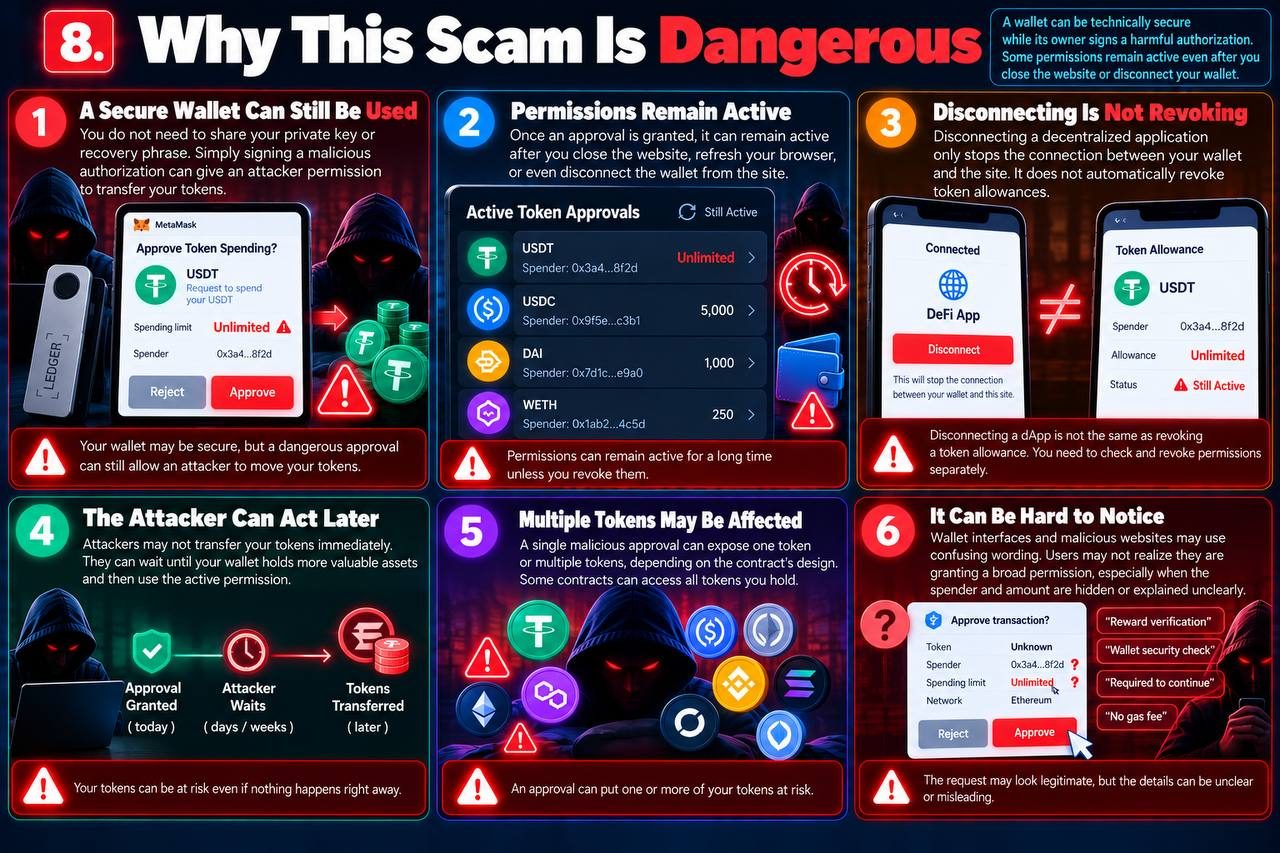
A wallet can be technically secure while its owner signs a harmful authorization. Some permissions remain active after the user closes the website or disconnects the wallet.
Disconnecting a decentralized application is not necessarily the same as revoking a token allowance. Understand exactly what permissions remain active.
9. SAFORYN Security Reminder
Your wallet is only as safe as the permissions you grant. Verify the website, spender, and token amount before approving. Never sign a transaction you do not understand.
Remember: You can lose cryptocurrency without ever sharing your recovery phrase. Always verify before you approve.
10. Share This Article. Help Prevent the Next Victim.
Many crypto users believe that keeping a recovery phrase private is enough. Malicious token approvals and deceptive signatures can still expose assets to theft.
SAFORYN encourages you to share this article with friends, family, and crypto communities. Your one share could help someone recognize a dangerous wallet approval before losing their digital assets.